

If the print on your Rotogravure Woven Bag starts to peel, there is no need to panic. This is a fairly common issue in the woven bag industry.
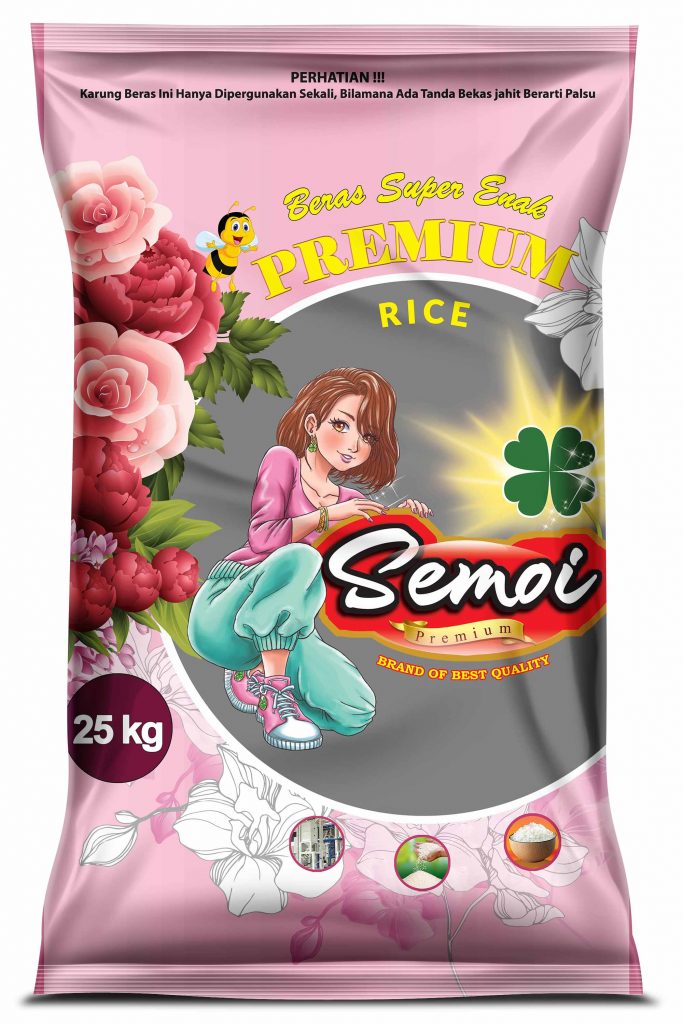
In most cases, the OPP layer (printed film) peels off due to insufficient heat temperature during the lamination process, when the printed plastic layer (Printed OPP) is bonded to the PP Woven Bag.
The 3 Main Production Stages of Rotogravure Woven Bags:
1. PP Woven Bag Production
The PP woven fabric is woven into sheet form and tubular shape (tubing), then produced in roll form.
2. OPP Printing Process
At the same time, a transparent plastic film called OPP is printed according to the desired branding design.
It is worth noting that in Indonesia, packaging sizes of 5 kg and above commonly use PP woven bags (sacks). For packaging below 5 kg, flexible packaging (multi-layer plastic bags) is more commonly used.
3. Extrusion Lamination Process
The printed OPP roll is then bonded to the PP woven roll using a PP extrusion process before being cut and sewn for final finishing.
Other Possible Causes of Peeling
Another reason for poor adhesion is the use of non-lamination grade OPP film.
If the printed OPP is laminated with CPP Metalized film, delamination may occur not between the woven bag and the OPP layer, but between the OPP and the CPP Metalized layer. This can happen if the bonding process during dry lamination is not properly executed. In such cases, the issue originates from the OPP printing (flexible packaging) factory.
Industry Collaboration
Rotogravure woven bag production typically involves collaboration between two factories:
-
Woven Bag Manufacturer
-
Printing / Flexible Packaging Manufacturer

Solutions
-
Solutions for Manufacturers
The solutions for manufacturers include:
-
Applying Corona Treatment to the Printed OPP film before lamination
-
Increasing the temperature during the Extrusion Lamination process
-
Servicing and properly maintaining the Extrusion Lamination machine
Good News for Customers
The good news for customers is that peeling of the printed layer does not affect the structural strength or load-bearing performance of the woven bag once it is filled.
However, we understand that this issue can be inconvenient for users.
A practical solution is to request replacement bags — typically around 100 bags per 1,000 pieces as compensation. From a business perspective, this also encourages the producer to maintain stricter quality control and prevent similar issues in the future.
If the peeling issue is excessive, the appropriate action is to return the defective bags and request a full replacement.
-