

The answer is:
The reason lies in an outdated or less modern business model.
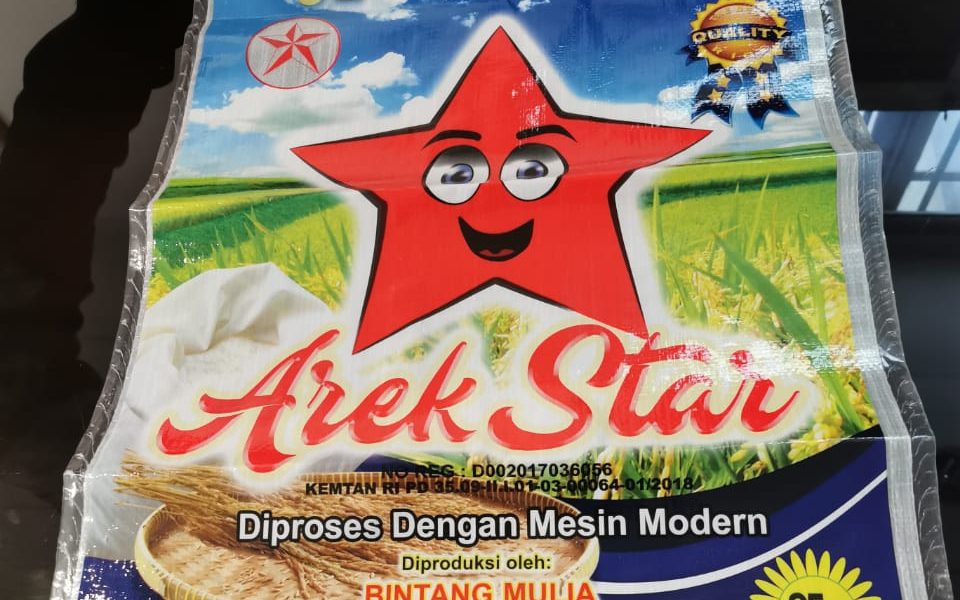
Many woven bag manufacturers still use a subcontracting model for OPP printing (OPP Printing / CPP Metalized – Printed OPP), outsourcing the printing process to a separate flexible packaging factory.
Because their production input depends on the printing factory, they must wait for the printed OPP of a specific brand before the laminated bag can proceed to the final stage — bonding (PP Extrusion) the Printed OPP to the woven plastic bag.
This business model not only extends lead times due to waiting for printed OPP deliveries from another factory, but it also creates production bottlenecks.
Since each brand’s Printed OPP design is different, manufacturers must complete production one brand at a time for efficiency. Most woven bag factories typically operate with only one lamination machine (due to high investment costs). As a result, production queues, delays, and bottlenecks are common.
So, What Is the Solution?
The Solution
The solution is to transform the traditional “single-factory” business model into a “tandem” model.
In other words, factory owners should establish a second, integrated facility — a Printing Factory, commonly known as a Flexible Packaging Factory — operating alongside the woven bag factory.
This integrated approach enables better control over the production timeline and significantly reduces dependency on external suppliers.
Just-In-Time Manufacturing & Skilled Coordination
Implementing a Just-In-Time (JIT) manufacturing system requires skilled human resources to coordinate the manufacturing timetable — from monitoring raw materials to supervising each stage of production.
The goal of the PIC (Person-in-Charge) is to ensure:
-
Maximum production efficiency
-
Faster delivery times
-
Minimal working capital utilization
Looking Ahead: Manufacturing 4.0
Moving forward, the future lies in Smart Factory systems and automation.
In today’s digital era, connectivity allows different divisions and production stages to be integrated through specialized software systems. Combined with automation, this enables manufacturers to streamline production seamlessly — eliminating bottlenecks and ensuring Just-In-Time availability of semi-manufactured goods such as Printed OPP or CPP Metalized Printed OPP.
A modern manufacturing system is no longer just about machinery — it is about integration, connectivity, and intelligent production flow.